February 3, 2025
Today is the day we will be sailing through the Panama Canal. Because the Volendam is relatively small, we are able to use the original locks, which have been in operation since 1914. I did a partial transit on the Caribbean Princess back in 2017. Because that ship was too big for the old locks, we went through the new locks, which just opened in 2016. I have therefore been looking forward to experiencing the original canal passage, as well as making a full transit.
I set my alarm for 7:00AM, but the ship was rocking and rolling so much last night (from the waves, not the disco!) that I slept poorly. So, it was close to 8:00AM when I rolled out of bed – under my own steam; the rolling wasn’t that bad. I turned on the TV to the bow camara to hear the canal passage commentary that was due to begin at 8:00. Apparently, I missed seeing a crocodile in the canal. Oh well, I wasn’t planning to swim in there anyway.
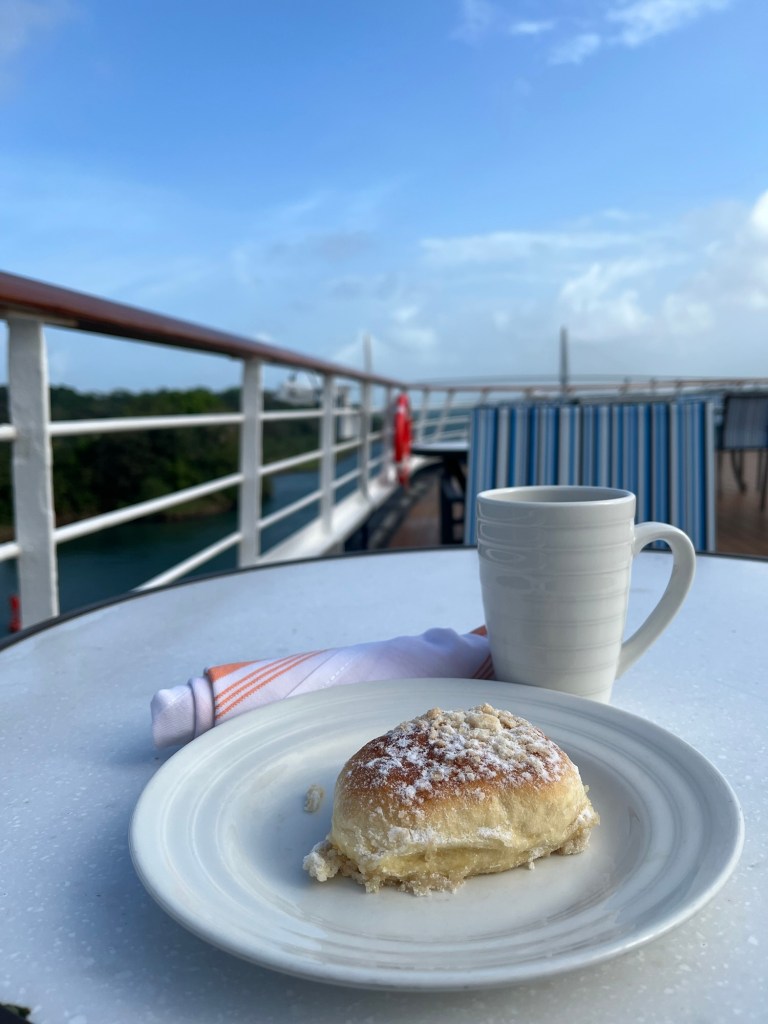
Deciding not to jockey for a position at the bow, I headed to the aft pool deck to view our passage through the first lock. I had read that Holland America serves something called a Panama Roll on the morning of the canal passage and I was pleased to find a tray full of such rolls, as well as coffee service, ready and waiting on the aft deck. The Panama Roll turned out to be a custard-filled donut. It was fresh and delicious. There were very few people at the back of the ship. It was peaceful but windy.
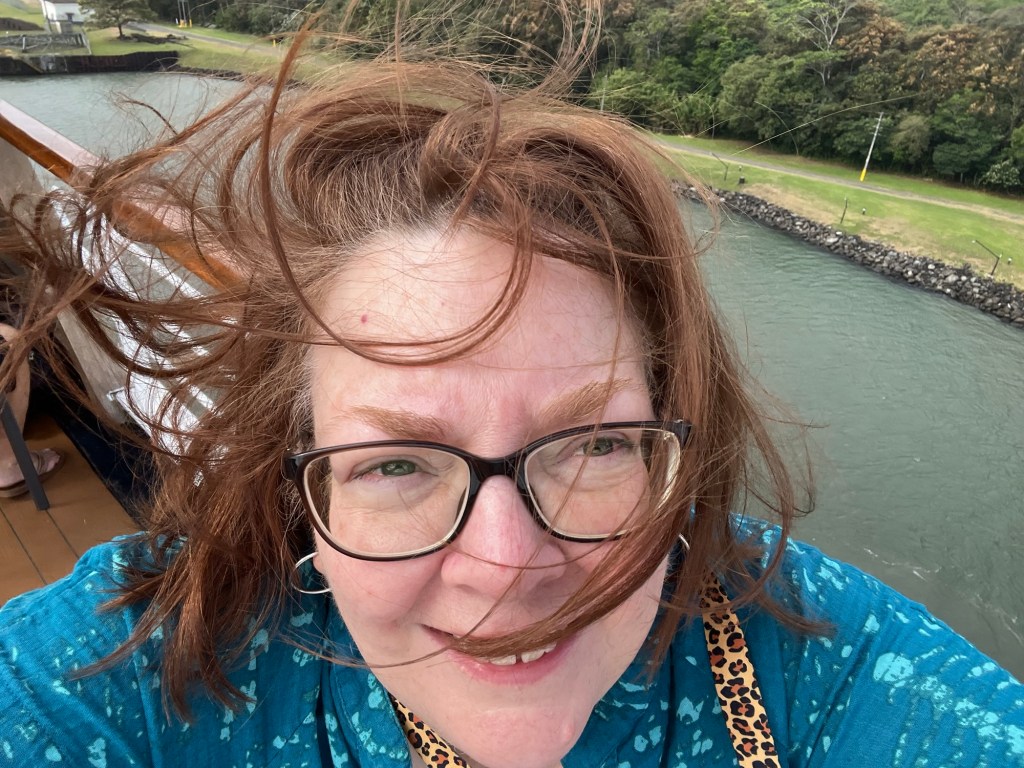
Around 8:45AM it was our turn to enter the Gatun Locks. The ship is moved into place with the help of tugboats – it felt a lot like maneuvering into a carwash, with no room for error. There is less than a meter gap between the ship and the wall of the lock. The ship is then connected to “mules”, which are small locomotives that pull it through the locks.
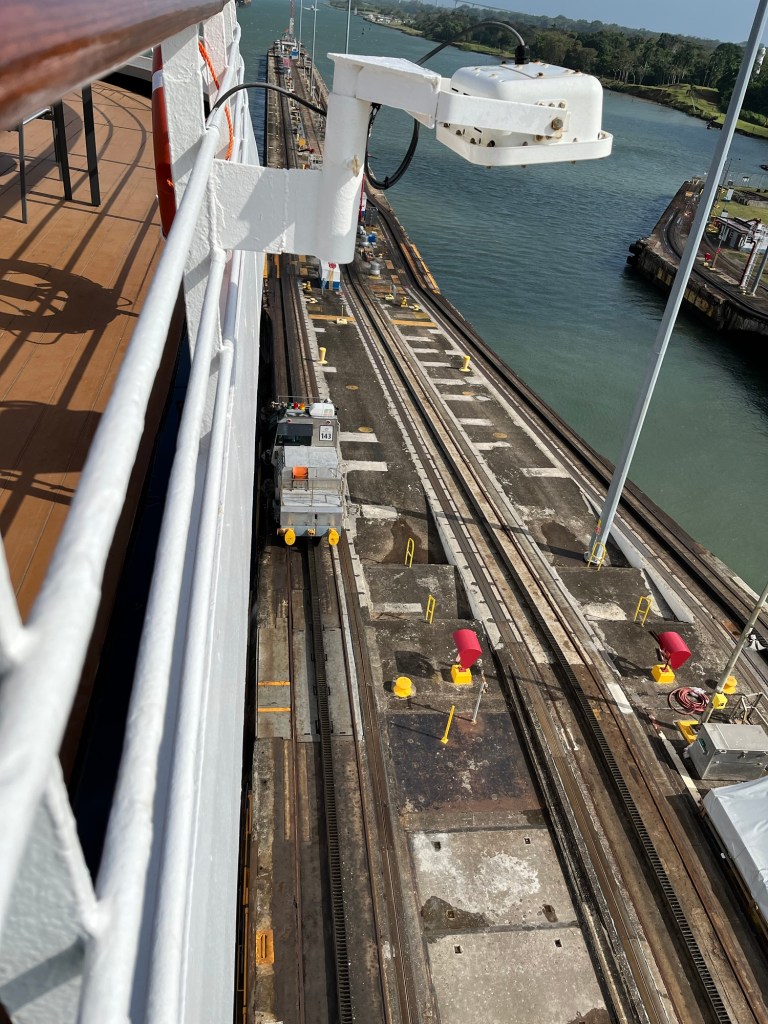
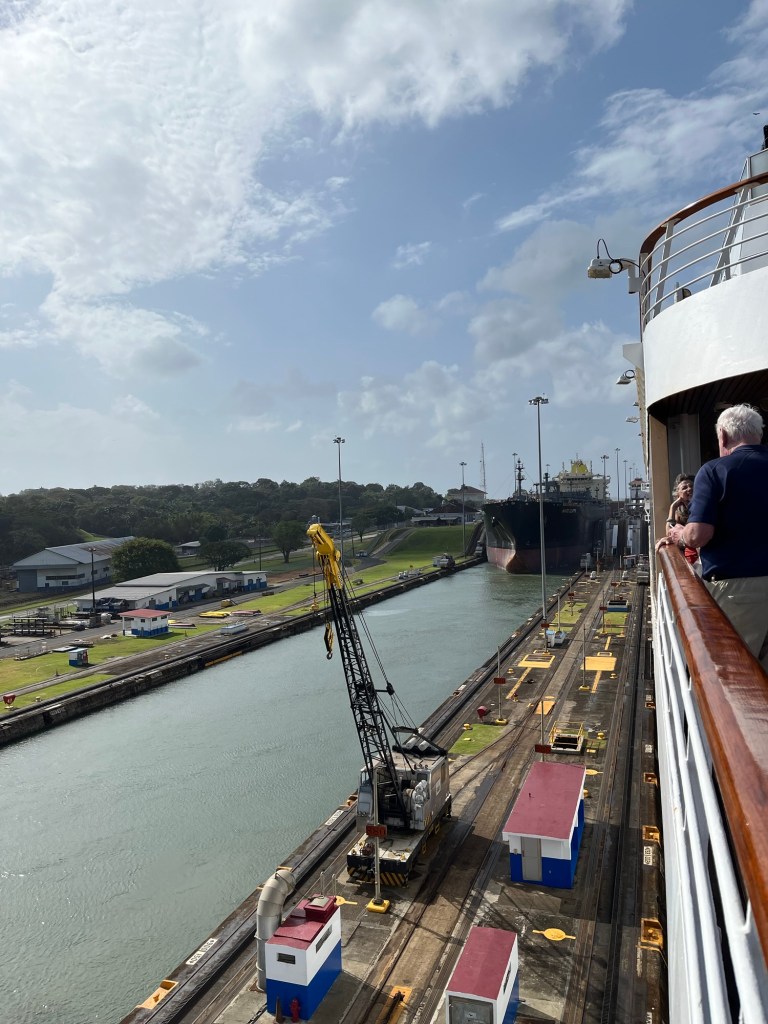
Once we were in the lock, the gate swung closed behind us and the water level began to rise, eventually lifting us to the level of Gatun Lake on the other side of the lock. In the neighboring channel, water began to pour out, lowering the level for the Caribbean-bound ship.
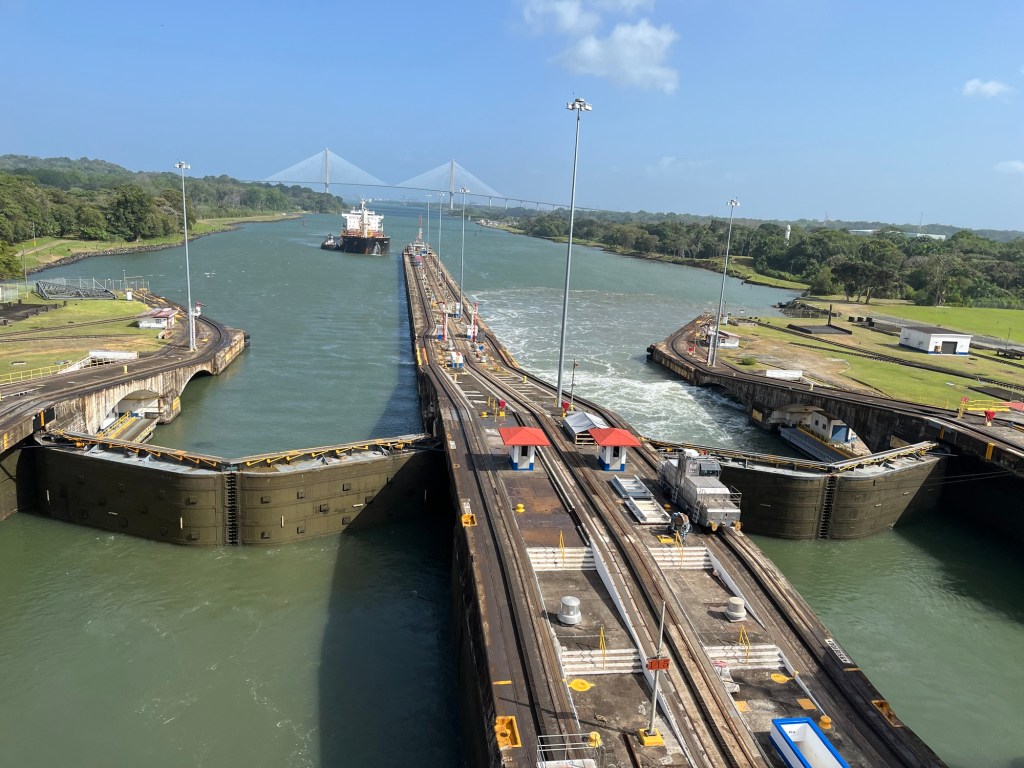
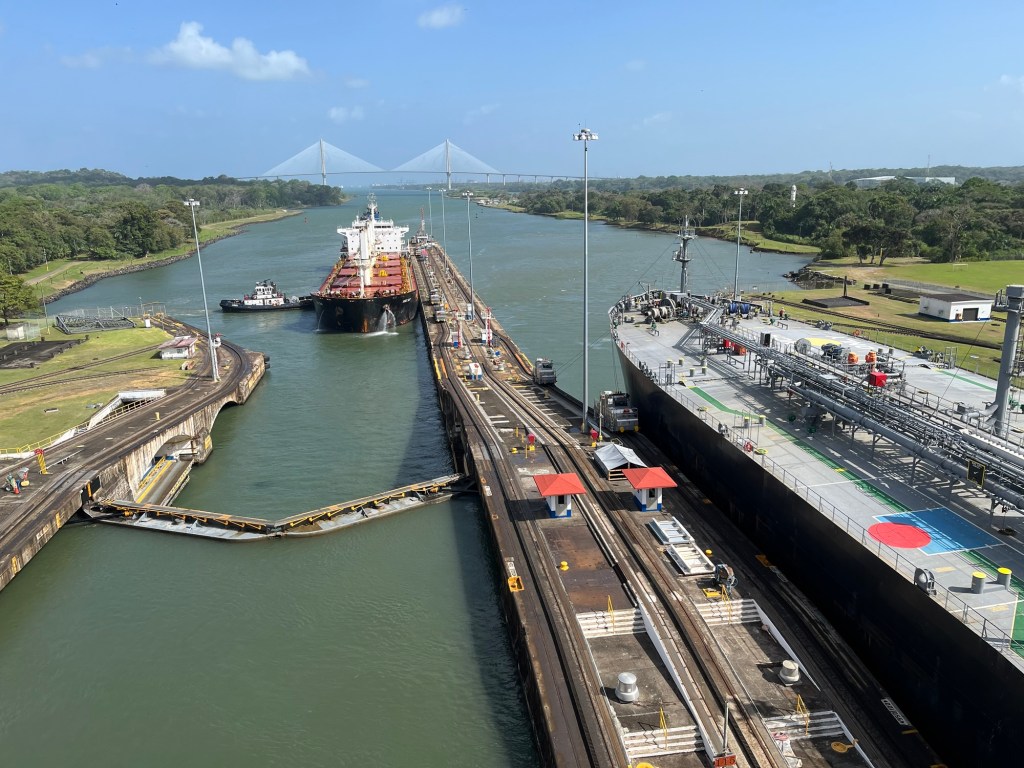
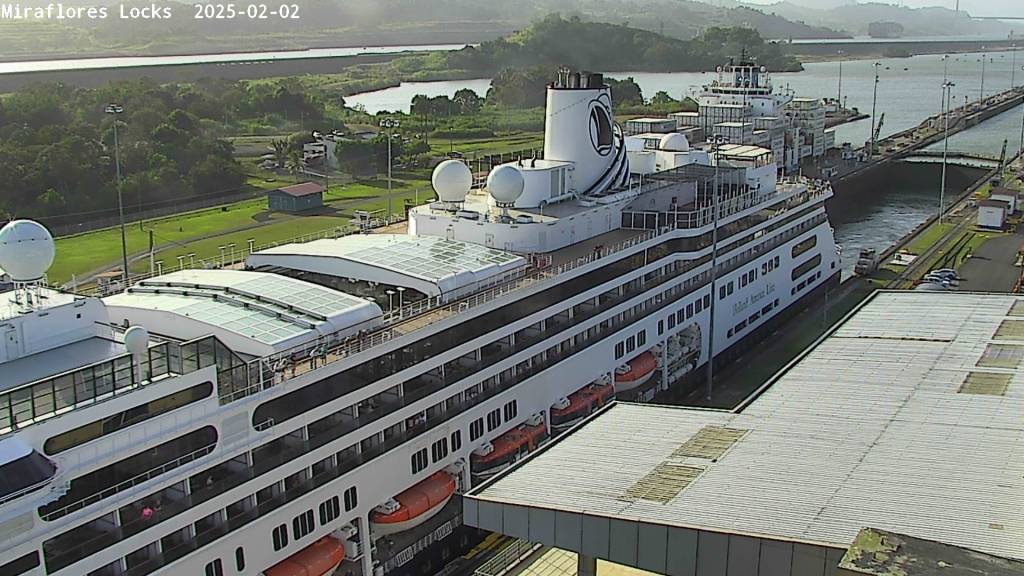
We then travelled across Gatun Lake, through the Culebra Cut, and then through the Pedro Miguel Locks, which lowered us to the level of Miraflores Lake. Around 4:00PM we approached the final set of locks, the Miraflores Locks. There is a visitors’ center at the final set of locks, and it so happened that our passage coincided with Secretary of State Marco Rubio’s visit to the Canal. The visitors’ center was therefore lacking its usual crowd, although the camera did catch our passage, which is the image at the top of this post.
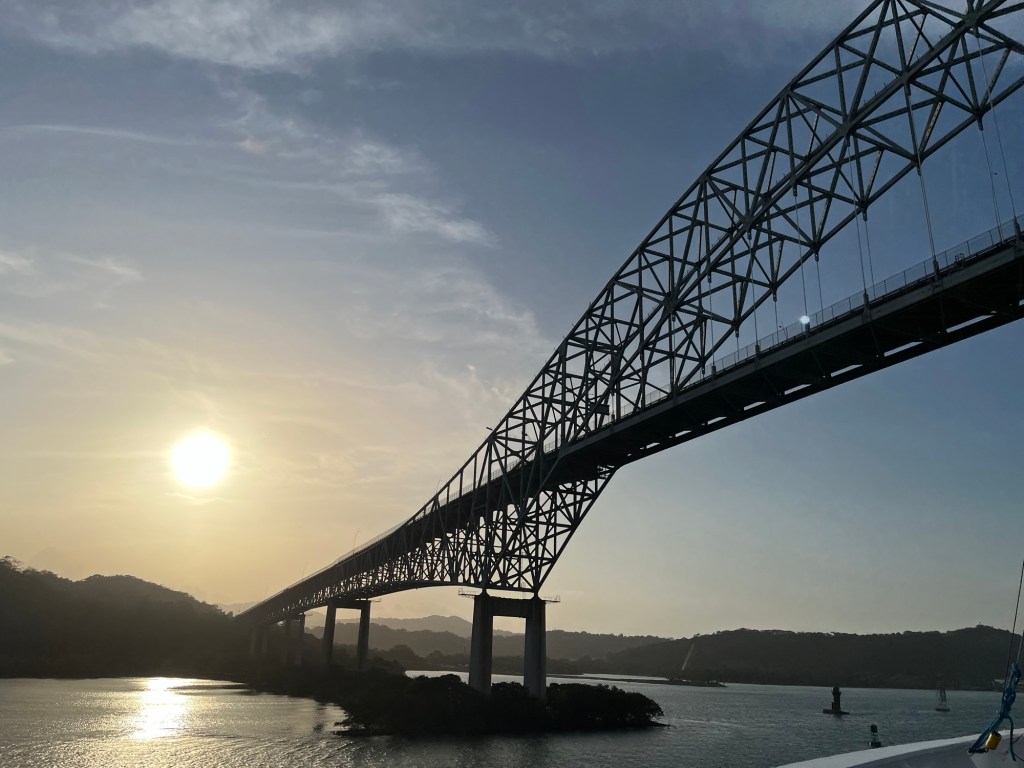
It was nearly sunset by the time we passed under the Bridge of the Americas and into the Pacific Ocean. It takes a full day to transit the Panama Canal, which seems like a long time. But compared to the alternative of sailing around Cape Horn, it is lightning fast.
Next stop – Ecuador. Very excited to explore the west coast of South America!


 It’s On My List
Leave a Reply