February 7, 2025
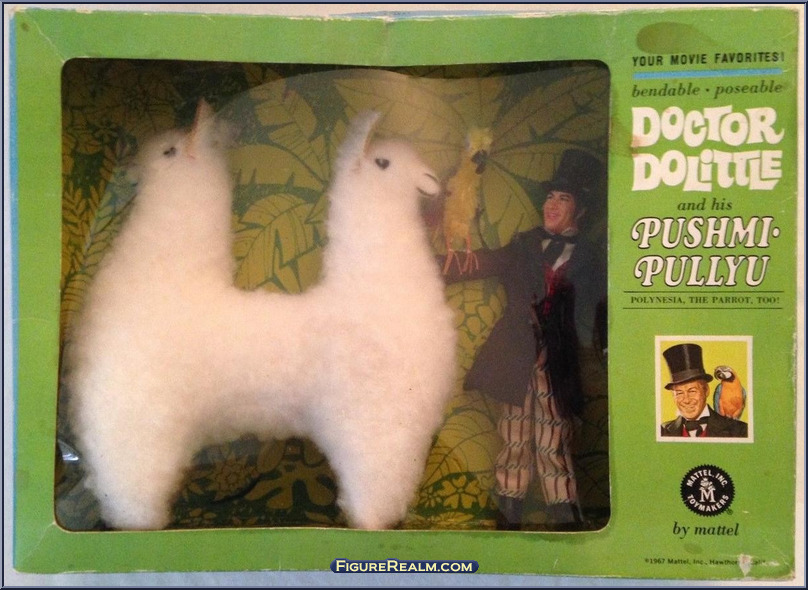
Peru has always been an especially exotic destination to me. When I thought about Peru, I thought about Incas, the Andes and llamas. I trace my fascination with llamas back to the pushmi-pullyu toy from the 1967 Doctor Dolittle film that I had when I was a kid. Spoiler alert – I did not actually see any llamas in Peru. Nor did I learn much about the Incan civilization or see much of the Andes. However, I had a fascinating visit and learned things about the geography and ancient peoples of Peru that I never knew before.
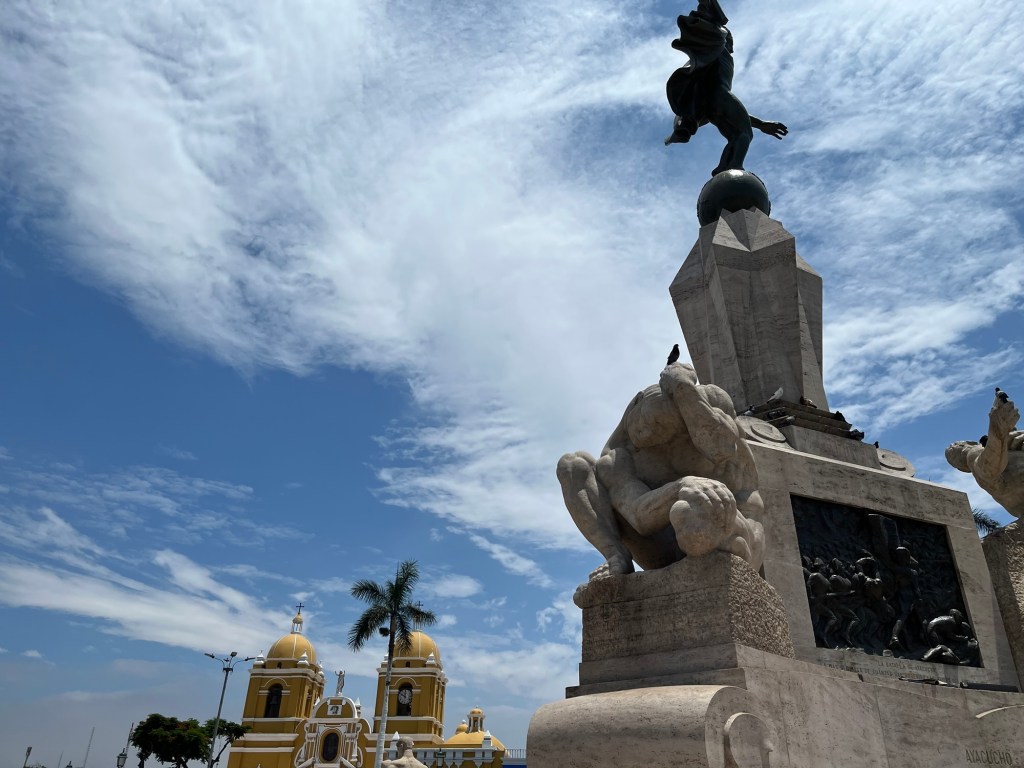
Our first of three Peruvian ports was Trujillo. Technically, we were docked in Salaverry, which is a port town about 9 mile southeast of Trujillo. I went on a “Best of Trujillo” excursion to view two major archeological sites as well as the historic city center.
Trujillo, Peru was named after Trujillo, Spain, the birthplace of Francisco Pizzaro who conquered the Incan leader Atahualpa in 1532, thereby claiming the Incan Empire for Spain. The city was founded in 1534 and has a beautifully preserved colonial city center. In the midst of the colonial buildings is the Plaza de Armas in which stands the Freedom Monument, which was built in 1920 to commemorate the 100th anniversary of Peruvian independence.
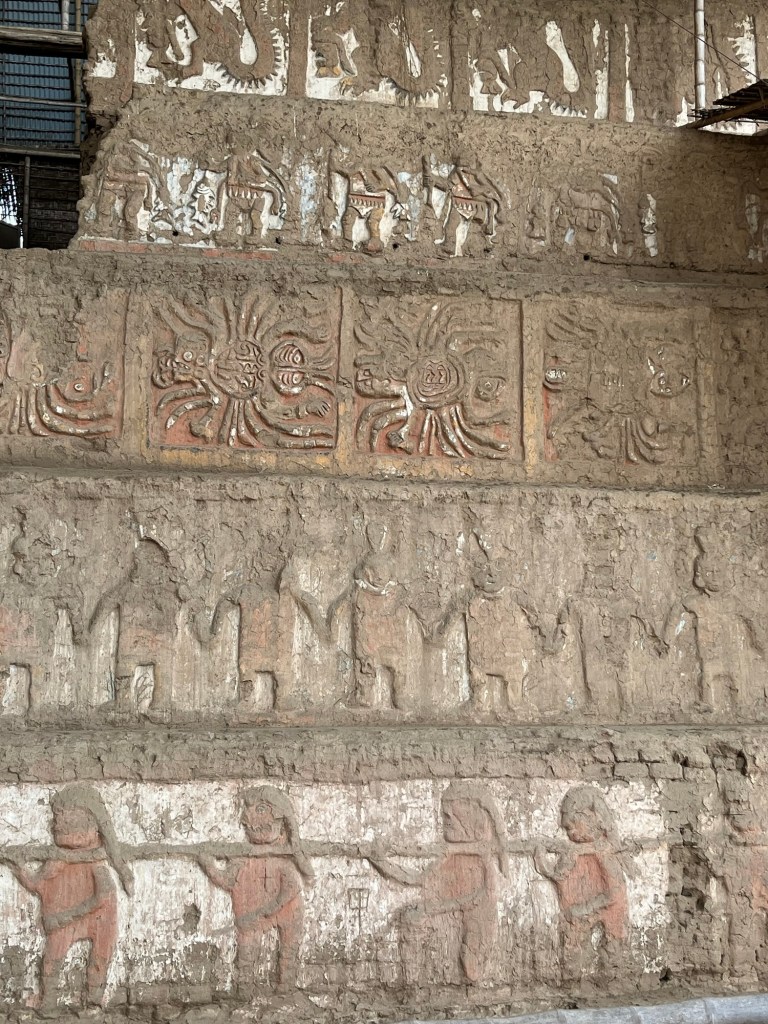
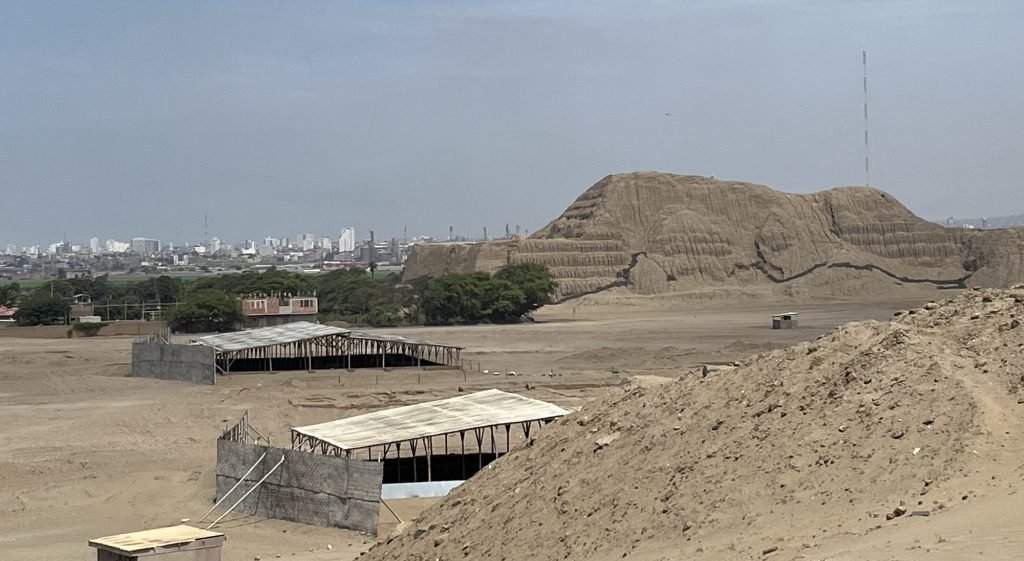
The first archaeological site we visited was Huacas de la Luna y del Sol (Temples of the Moon and Sun) which were built by the Moche people, who inhabited the region from about 100 to 800 AD. Moche society was agriculturally based, and they built an elaborate irrigation system that enabled them to grow crops in the arid coastal region. Our guide described the Moche’s belief system as “reciprocal” – their deities provided them with all that they needed to survive and they in turn provided their deities with sacrifices, of the human variety.
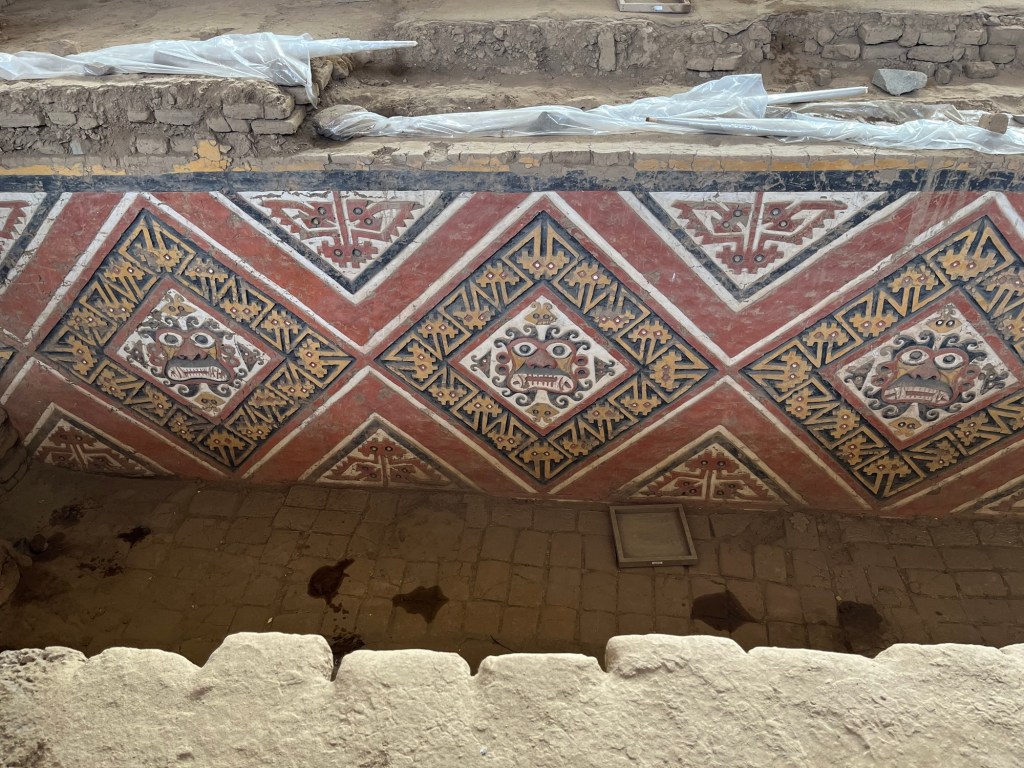
The two temples are large, flat-topped pyramids built from adobe bricks. The Temple of the Sun is the larger structure, but it was partially destroyed by conquistadors who looted it for gold. The Temple of the Moon is in much better condition, and we had a very comprehensive tour of the site. We were able to walk up the ramp to the top, along the same path as the poor souls who were designated to be sacrificed. Over the years, depending on how well things were going, different deities fell in and out of favor, so new walls were built on top of older ones with different symbols carved and painted onto the facades. The temple therefore grew in size over time and excavations have revealed a rich and interesting history of these people. The discoveries included some pretty gruesome details about the human sacrifices that made me question whether I would be able to sleep that night. Thankfully, seven hours of tromping around in the hot sun knocked me out pretty effectively.
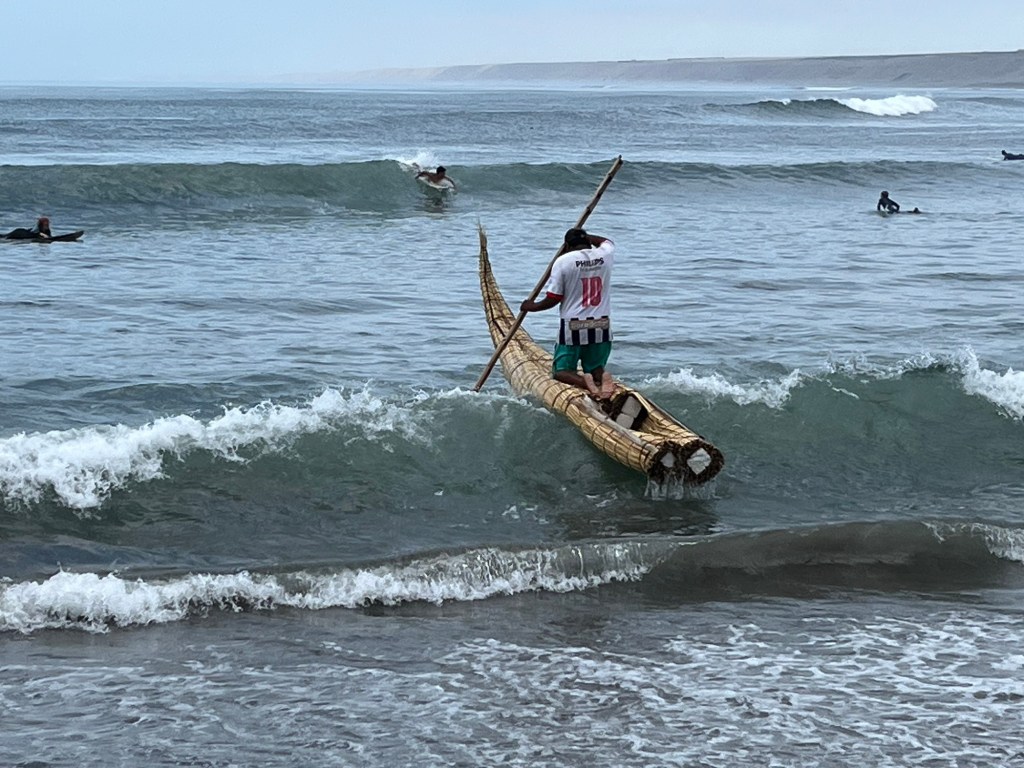
We then had a refreshing lunch break in the high-end Huanchaco beach district after which we were treated to a demonstration of a “totora horse” – the traditional reed boats that have been used by fishermen in Peru for 3,000 years.
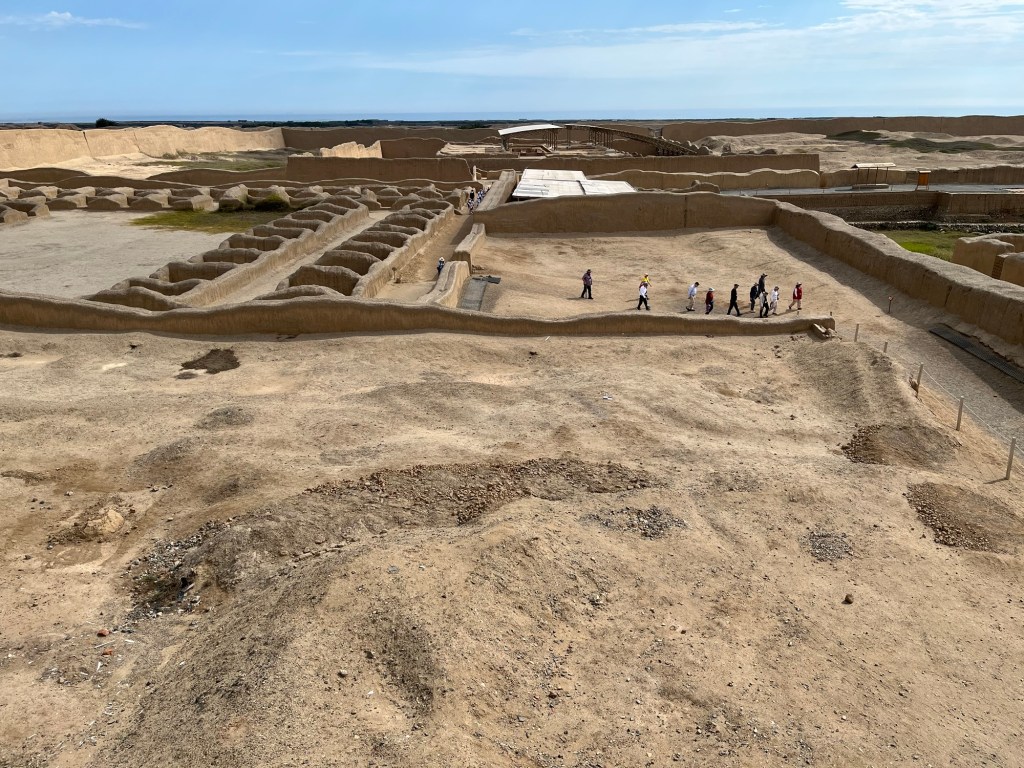
Then it was off to Chan Chan, the largest earthen architecture city in pre-Columbian America. It was built by the Chimú people, who lived in the area from approximately 900 to 1470 AD, between the end of the Moche culture and the start of the Incan occupation of the region. The city covered nearly 8 square miles and was home to between 60,000 and 100,000 people. The city is so close to the ocean that you can hear the surf from inside the city walls. Needless to say, fishing was an important part of the Chimú economy.
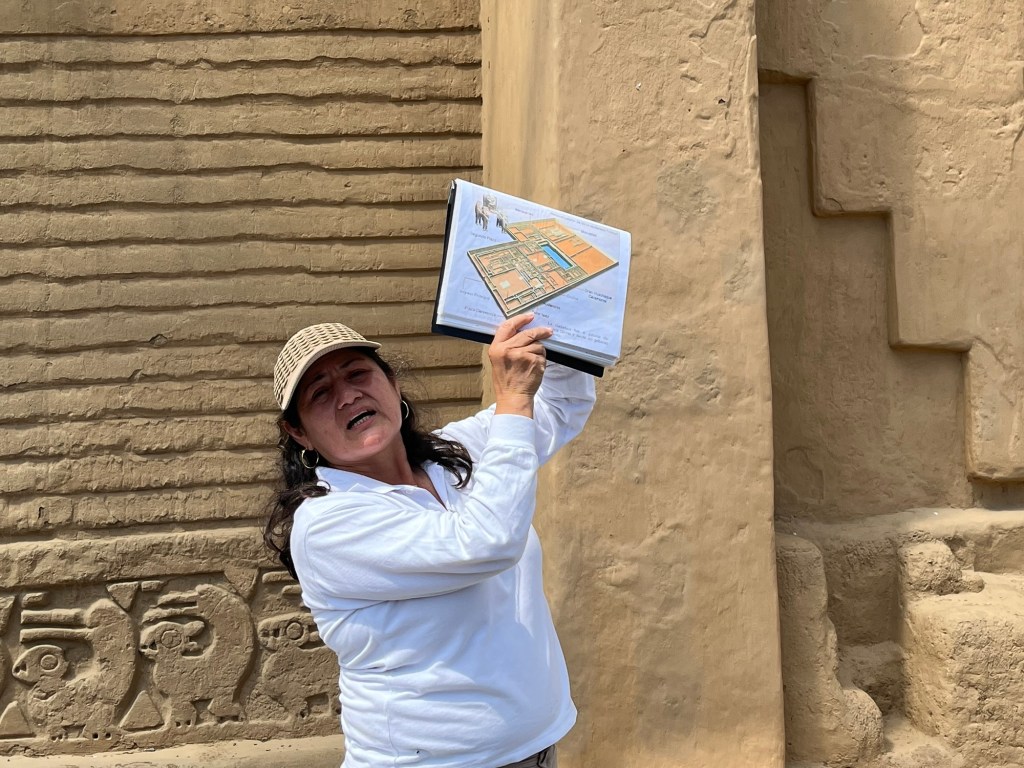
At the end of the day, exhausted, sweaty and slightly sunburnt, I realized three things. First, llamas do not live in the desert coastal plain of Peru. I will have to seek them out when we reach a more llama-friendly climate. Second, the Incas were only in this region for about 50 years from the time they vanquished the Chimú until they in turn were vanquished by the Spanish. Third, since I did not opt to take the very expensive multi-day overland excursion to Machu Pichu, I will need to be content with viewing the Peruvian Andes from a distance. As we travel on to Chile and Argentina, I am confident I will be treated to glorious mountain vistas.
Bottom line, there is a lot more to Peru than llamas, Incas, and Andes, and I have two more opportunities to soak in the rich and diverse Peruvian culture and history.

 It’s On My List
Leave a Reply to Fellow3M Cancel reply