Greetings! Well, I was all caught up on my blog after our first Chilean port, but then had some busy port days and some rocky sea days so fell behind again! As I write this, it is March 3 (happy b-day, BF!) and we are having a leisurely sail along the Antarctic Peninsula. I will go back and write up posts for the rest of the Chilean ports – I absolutely loved Chile! But to get back on track with blogging, I decided to jump in with Ushuaia, the gateway to Antarctica.
February 27, 2025
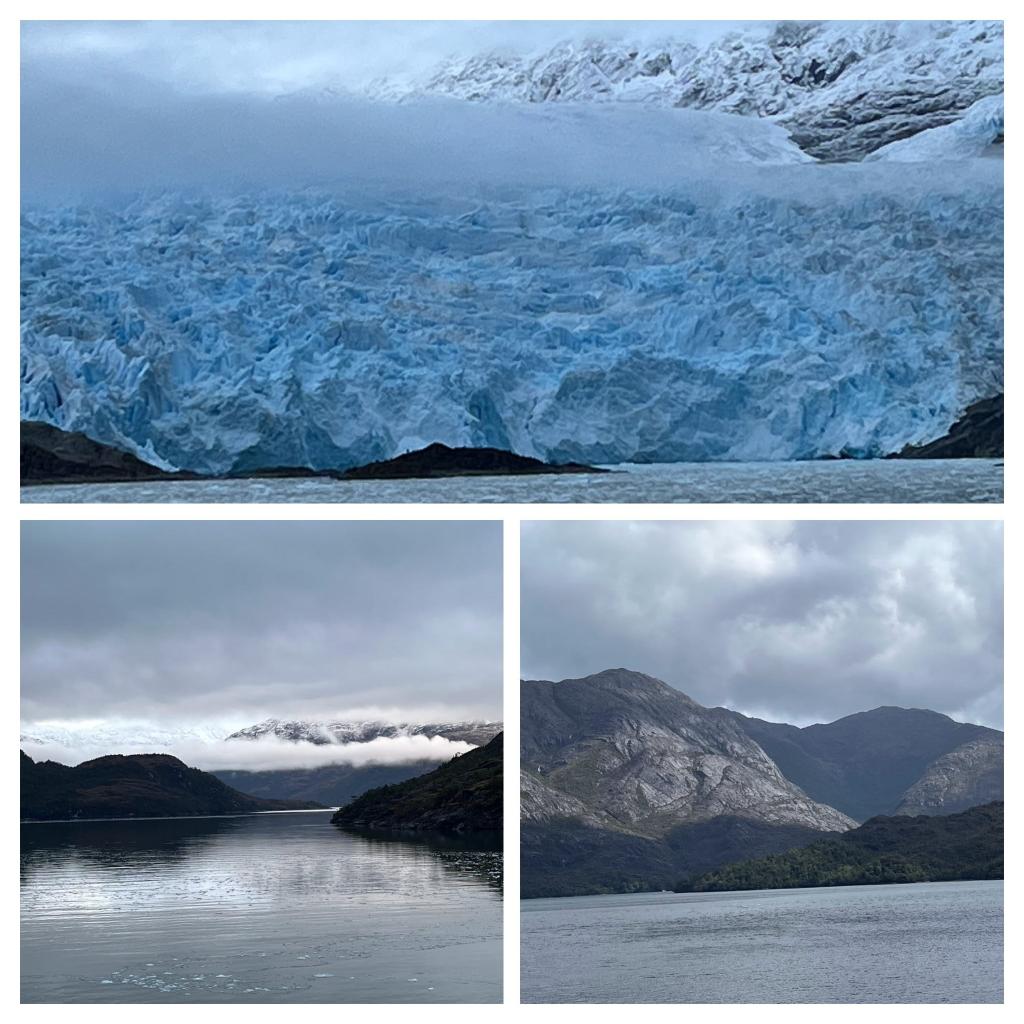
Over the previous two days, we made our way through the Strait of Magellan, with a stop in Punta Arenas, Chile (which will get its own post) and then through the Beagle Channel (named for Charles Darwin’s ship). The tip of the continent is an archipelago as the mountains taper off into the sea, creating a dramatic landscape of islands and fjords. Our passage was smooth, as the Strait is sheltered from the open sea. It is rugged and undeveloped. One can imagine that this scenery is essentially unchanged since Magellan and his crew, and later Charles Darwin, passed this way.
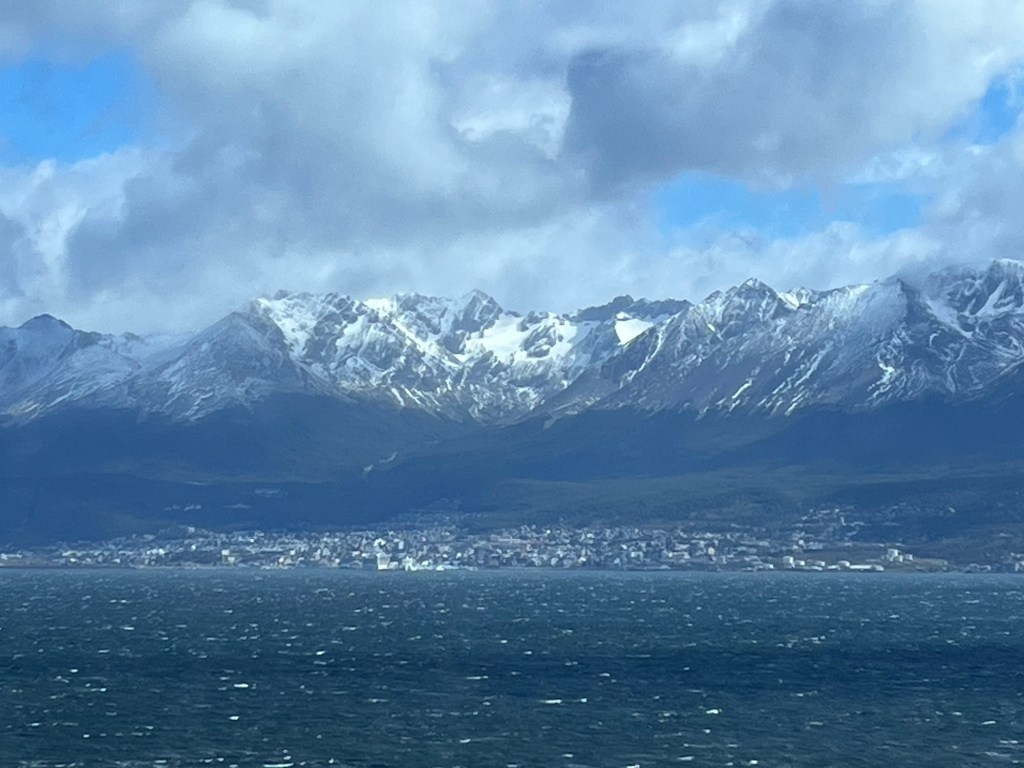
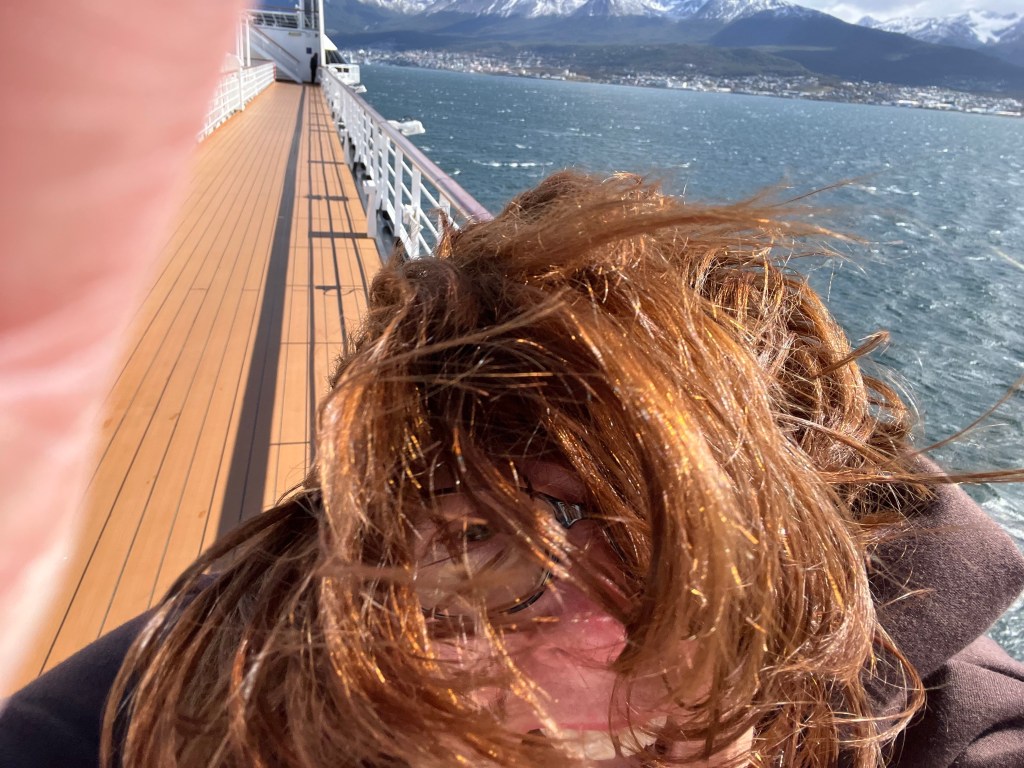
There are five cities that are considered gateways to Antarctica: Ushuaia, Argentina; Punta Arenas, Chile, Cape Town, South Africa; Hobart, Australia; and Wellington, NZ. Our approach to Ushuaia (I’ve heard several pronunciations, and I am going with “oosh-WHY-uh”) was quite dramatic. It calls itself the “End of the World” and it definitely feels that way as you sail into the bay. After sailing through endless miles of pristine, untouched islands, this small city suddenly appears, clinging to the rocks below imposing snow-capped peaks. To say it feels remote is an understatement. The photo at the top of the post was taken from inside the Crow’s Nest, so it is the victim of spotty windows (hard to clean those at sea!). The white dots and blobs at the shoreline are the city. I stepped outside to get a clearer view as we drew closer, but as you will see from the attempted selfie below, the wind made it very challenging! My headband blew right off – happily captured by my hood. I decided to retreat rather than be blown off deck myself.
We arrived around 2:00PM and I had an excursion booked called “Trekking in Ushuaia”. This was defined as a “strenuous” excursion, and I was a bit concerned that this would be too difficult for me, but I really wanted to get out into the countryside, and I wanted to push myself. Throughout the previous 30-something days of the cruise, I’ve done a lot of walking, racking up several 5-mile days, so I was as ready as I could be.
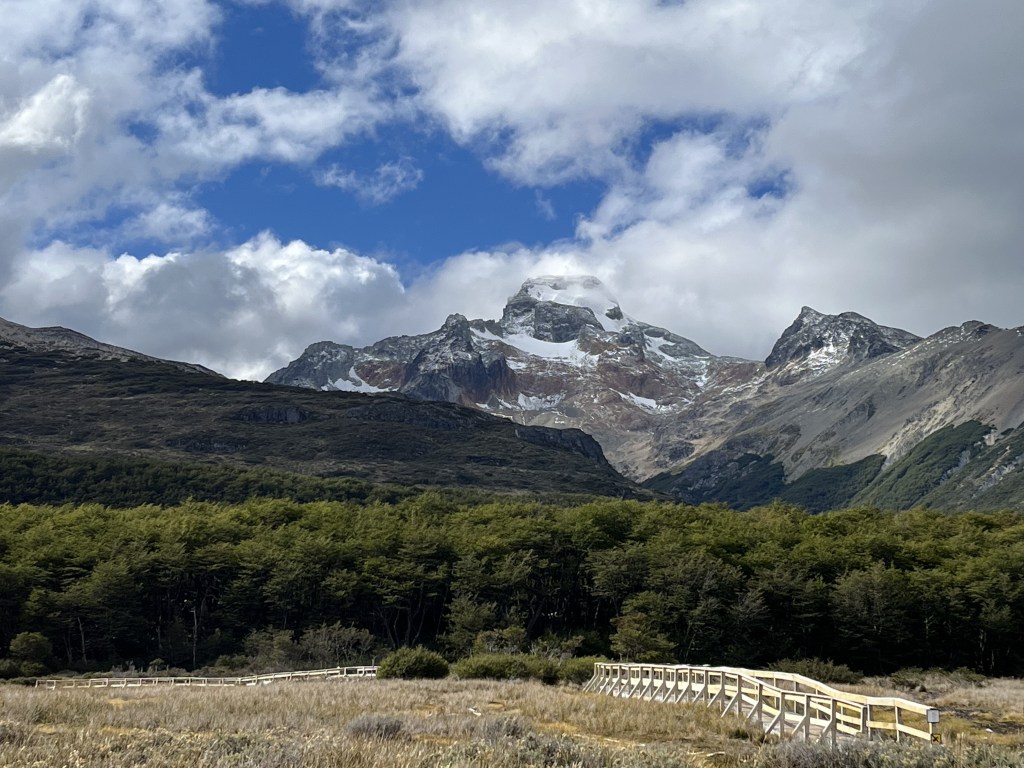
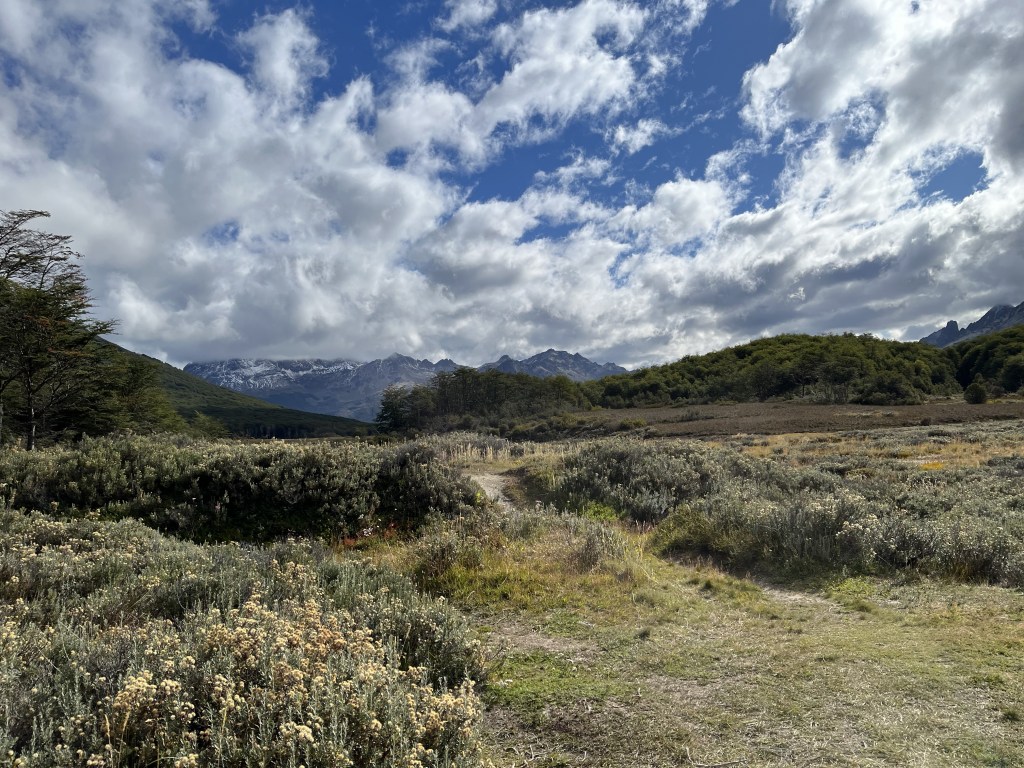
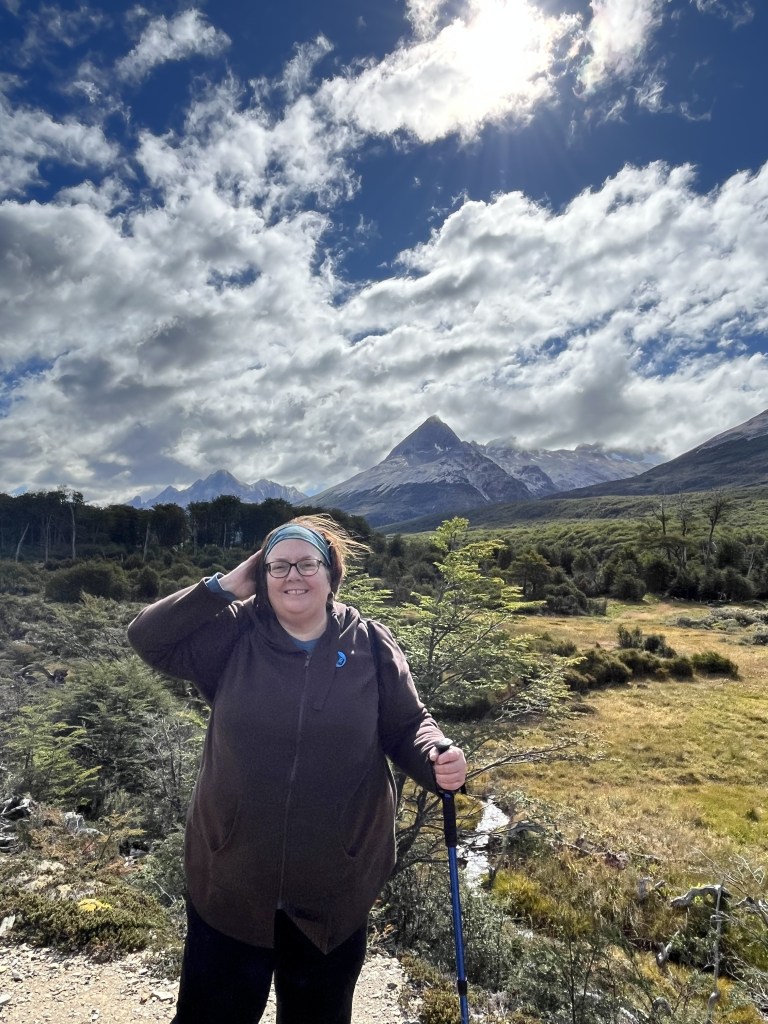
There were only 13 of us hearty souls on the trek, which was about a 20-minute scenic drive from the city. Our base was Husky Park, where, as the name implies, they train sled dogs. While we were surrounded by beautiful mountains, our actual trek was across the valley, with one relatively steep bit near the end. The valley floor is primarily a peat bog, which freezes over in winter and gets covered with 4-6 feet of snow, making it an ideal place for dog sledding and cross-country skiing. It made for a wet and mucky trek, which is part of what made it strenuous. But we stopped frequently to learn about the flora and the history of the region. By the end of the day, I was exhausted but fully satisfied with the experience.
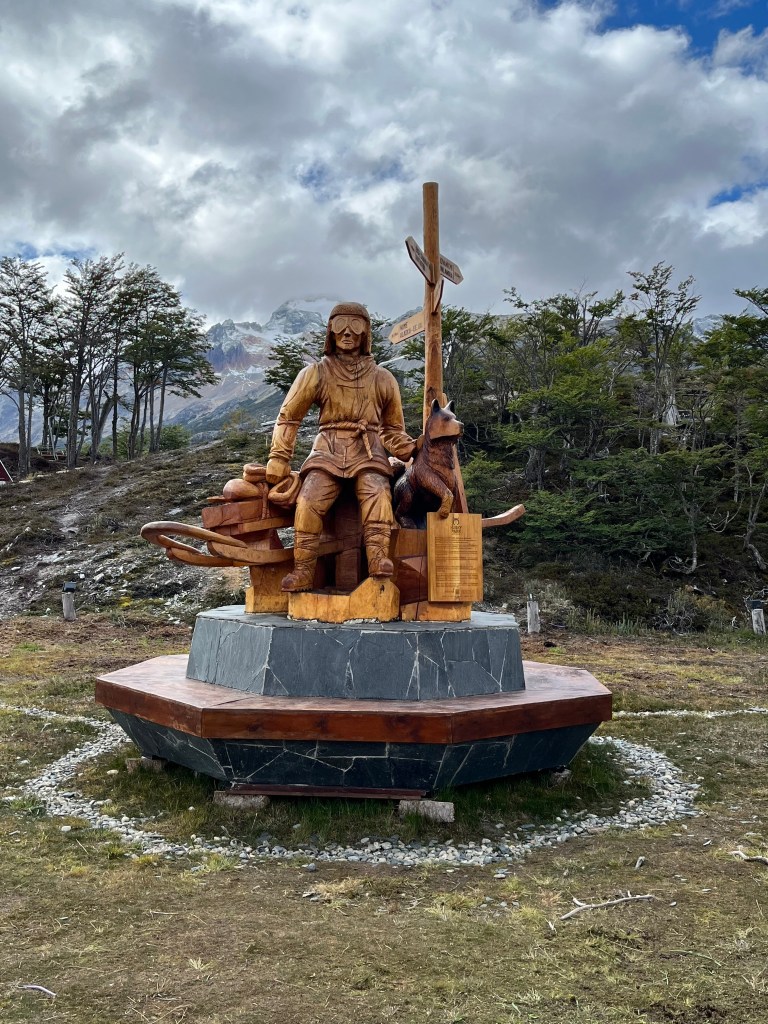
Ushuaia is located on the island of Tierra del Fuego, or “land of fire”. It was named by Magellan because when he sailed into the region, he saw the fires of the indigenous people burning in the nighttime. Tierra del Fuego is the southern tip of the Patagonia region, which stretches across Argentina and Chile and is world-renowned for its pristine natural beauty. I felt incredibly privileged to be able to experience a small taste of that beauty.
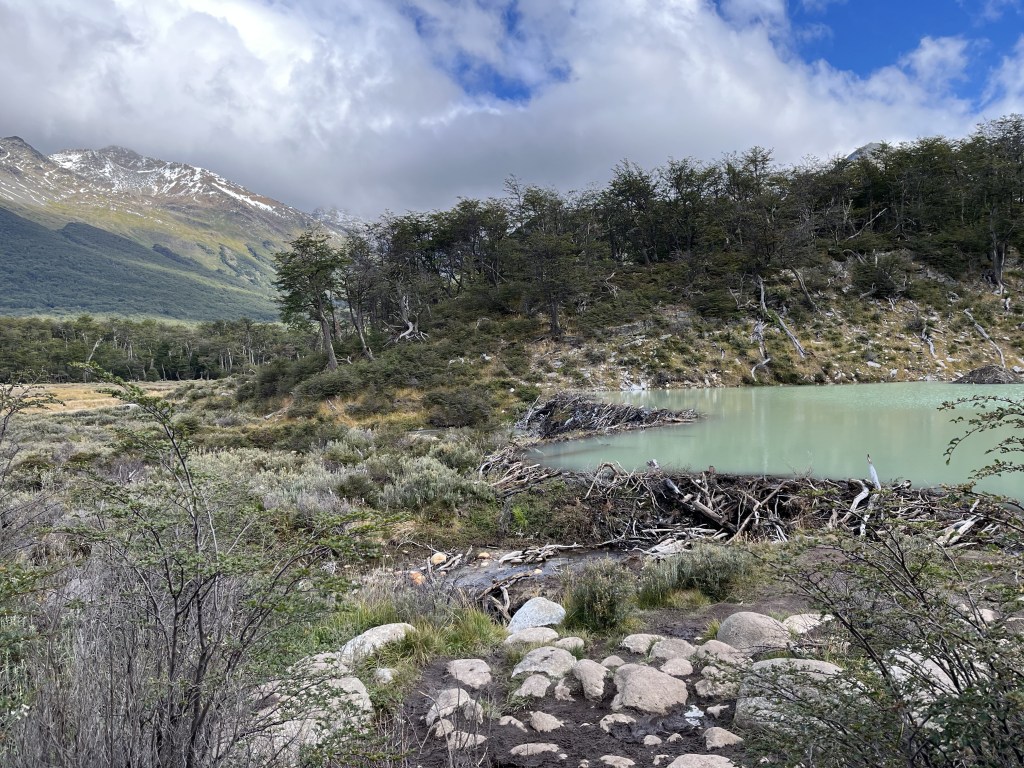
Along our walk we passed several large beaver dams, which while beautiful, are actually very destructive. Beavers are not native to the region. In the 1940s, the Argentinian government had the brilliant idea of importing Canadian beavers to start a fur trade. The problem is that there are no natural predators to help control the beaver population in the region, so they have multiplied unchecked. And unfortunately, the pelts were not valuable enough to encourage sufficient hunting.
At the end of the trek, it was back to the husky camp for refreshments, then back to the ship for an 8:00PM sail away. The captain warned us that we could be in for a rough night, as we were racing to get through the Drake Passage in between two storm fronts. So, I took my non-drowsy Dramamine (which actually makes me very drowsy), ordered a sandwich and ginger ale from room service, and settled in for a well-deserved rest.


 It’s On My List
Leave a Reply to Anonymous Cancel reply